

Mahesh Kumar
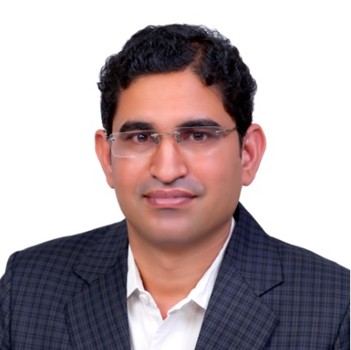
Mahesh Kumar
ProfessorAbout
Prof. Mahesh Kumar is a Professor
at the Indian Institute of Technology (IIT) Jodhpur. He has received the INSA
Medal for Young Scientists-2014 by the Indian National Science Academy, the
MRSI Medal-2016 by the Materials Research Society of India, DAE-Young Achiever
Award-2016 by BRNS, Research Excellence Award 2020 by IIT Jodhpur, and
Friedrich Wilhelm Bessel Research Prize by The Alexander von Humboldt
Foundation, Germany. He is a recipient of the NAWA ULAM-2024 fellowship by the
Polish National Agency for Academic Exchange, Brain Pool Program-2022 by the
Korean National Research Foundation, Fulbright-Nehru Academic and Professional
Excellence Fellowships-2021; The Royal Society International Exchange
Award-2021; JSPS Invitation Fellowship-2021, PIFI Visiting Scientist
fellowship-2021 by the Chinese Academy of Science; Duo-India Professor
Fellowship-2020, Bhaskara Advanced Solar Energy Fellowship-2018, and INSA-DFG
International Bilateral Exchange Award-2015. Recently, INAE awarded him the
Abdul Kalam Technology Innovation National Fellowship 2022. He is also an
Editorial Board member of Nanotechnology, IEEE Sensors Journal, Bulletin of
Materials Science, and Nano Express. He is also a Fellow of the Royal Society
of Chemistry and the Institute of Physics. He is a founding Member and served
as Chair of the Indian National Young Academy of Sciences. He has published
more than 225 research articles. His research interests are focused on 2D
materials, Nanomaterials, Sensors, Semiconductor materials, and devices.
Key Research Areas
- 2D
materials and nanomaterials
- Semiconductor
materials and devices
- Gas
and chemical sensors
- Memristors
and neuromorphic devices
- Photodetectors
and optoelectronics
- AI/IoT-enabled
sensing systems
Recent Publications (Selected)
- Pandey V., Kumar A., Bharath S. P., et al.,
“Real-Time Hydrogen Monitoring via Pd/g-C3N4 Functionalized HEMT Sensor
with IoT Connectivity and Machine Learning Forecasting,” Sensors and
Actuators B: Chemical, 2026.
- Chatterjee A., Ganaie M. M., Mukherjee S., et al.,
“Spinel CuGa₂O₄ based Memristor Enabling Synaptic Plasticity and
Associative Learning for Next Generation Memory Devices,” Applied
Physics Letters (In Press).
- Bharath S. P., Kumar A., Mishra J., et al., “Neural
network-assisted impedance analysis for humidity and ammonia detection
using MXene and PtSnO₂ sensors,” ACS Sensors (In Press).
- Kumar S., Betal A., Chakkar A. G., et al., “MoS₂–PdS₂
heterostructure for NO₂ sensing under ambient conditions,” ACS Applied
Materials & Interfaces, 2025.
- Mukherjee S., Ganaie M. M., Chatterjee A., et al.,
“Self-Contained Analog Switching in AgHfO₃-x Memristor for Reliable
Synaptic Behavior,” Small, 2025.
Patents
- Power
Saving by Pulse-Modulated Sensor Arrays for H₂S Detection, Indian Patent
No. 578086 (Granted, 2026).
- rGO/Ti₃C₂Tₓ
MXene Composite Based NH₃ Sensor
for Real-Time Monitoring, Indian Patent Application No. 202511063925.
- Ag
Nanoparticle-Modified Nitrogen Plasma-Treated MoS₂ for High-Sensitivity
NO₂ Sensing, Indian Patent Application No. 202511006383.
- Radiation
Dosimeter Based on AlGaN/GaN High Electron Mobility Transistor (HEMT)
Structure, Indian Patent Application No. 202511021069.
Ongoing Projects
Development of IoT Enabled Surface
Active Metal Particles Anchored Semiconductor Oxides Based Wide Range Hydrogen
Sensor
Funding Agency: BRNS
Duration: Nov 2024 – Nov 2027
Collaboration: Prof. Michael Saliba, Institute for Photovoltaics, University of
Stuttgart, Germany
PhD from
Indian Institute of Science (IISc), Bangalore
Email ID
mkumar@iitj.ac.in
Office Phone No.
+91 291 280 1357
Personal Webpage
https://sites.google.com/iitj.ac.in/mkumar/home
For more professional achievements and detailed
information, please refer to the personal webpage.